Passing Tests, Failing Humans
Plus… safer agent rollout patterns, NVIDIA’s real bottlenecks, and this week’s hidden gems

Putting the Anthropic into philanthropic.
HOT TAKE
The Standardization Standoff
Handing MCP to a foundation won’t fix fragmentation if vendors keep shipping their own tool APIs.
So what shapes the future - Standards or Silos?
LAST WEEK’S TAKE
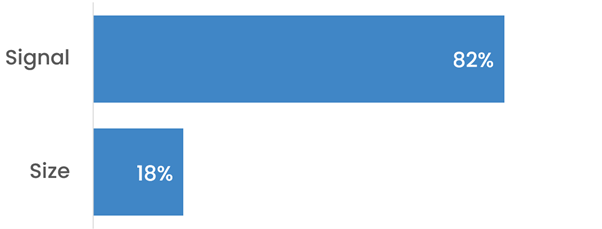
A clear signal
This could signal a shift away from scaling alone, with most choosing quality information to guide behaviour.
HIDDEN GEMS
Curated finds to help you stay ahead
Benchmarking Anthropic’s tool search at scale by loading 4,027 tools, running 25 agent tasks, and measuring how often the correct tool is retrieved.
A guide for production agent workflows focusing on workflow decomposition and tool-first design to containerized deployment and safety considerations.
Examining Chrome’s agentic security model and its layered controls that constrain automated actions and limit cross-site risk gives a clear view of how Google is adapting browser protection for agent workflows.
Open-source coding model from Mistral AI paired with a command-line assistant that supports multi-file edits, context-aware code automation, and scalable deployment workflows.
Job of the week
AI Product Engineering Lead // Palindrom (London, UK)
Palindrom builds automation-focused AI systems for clients and this role leads technical delivery across full-stack AI projects. You’ll combine hands-on engineering with direct client interaction and ownership of end-to-end solutions.
Responsibilities
Lead design and delivery of full-stack AI implementations
Build and deploy LLM systems with reliable backend integration
Define client requirements and shape technical execution plans
Coordinate engineering work across internal and external teams
Requirements
5 to 8 years engineering experience across diverse environments
Strong Python skills and experience shipping LLM-based products
Comfortable working directly with clients on solution scoping
Bonus: prior leadership, startup work, or high-pressure delivery
Find more roles on our new jobs board - and if you want to post a role, get in touch.
MLOPS COMMUNITY
How Sierra AI Does Context Engineering
Your CI can be green while an AI agent quietly fails the moment a real caller speaks - mishearing them, stalling, or even leaking data.
AI reverses old software trade-offs: slower, pricier, non-deterministic, so tests become repeated simulations, not single unit runs.
Each scenario runs 5-15 times with three agents - user, agent, evaluator - plus LLM-as-judge checking task-specific checklists.
Voice adds noisy environments and accents, while a model constellation runs tools and retrieval in parallel to stay responsive.
Wire these critical simulations into CI/CD and you catch the failure modes before customers ever reach support.
Governance for AI Agent Deployment
The sharpest risk in your AI stack is not hallucination - it is an unsupervised agent with an API key wired into production.
LLMs turn chaotic spreadsheets, tickets, and emails into unified customer profiles and incident timelines leaders can query in seconds instead of chasing people.
Productive agents behave like scoped interns, with clear instructions, tool governance, and spend limits rather than free rein over systems and data.
Robust red teaming, LLM-as-judge plus human review, and identity-aware tool access stop “Johnny Drop Tables” moments before they hit prod.
Treat those three as non-negotiables and agents shift from toy demos to real operational leverage.
Mapping NVIDIA’s Full GenAI Toolchain
A surprising pattern cuts through NVIDIA’s full GenAI stack: every layer hides a bottleneck that becomes unavoidable once models hit real production scale. This guide maps where those pressure points show up and what engineers can actually control.
Building and fine-tuning: NeMo, TAO, and CUDA-X libraries shape how far you can push large models before memory and parallelism limits bite.
Data and deployment: RAPIDS, DALI, TensorRT, and Triton define your latency floor and throughput ceiling.
Orchestration and hardware: GPU Operator, NIM, DGX, and Grace Hopper decide how smoothly you can scale or recover under load.
Together, these layers show how to turn a prototype LLM workflow into something that won’t buckle once real traffic arrives.
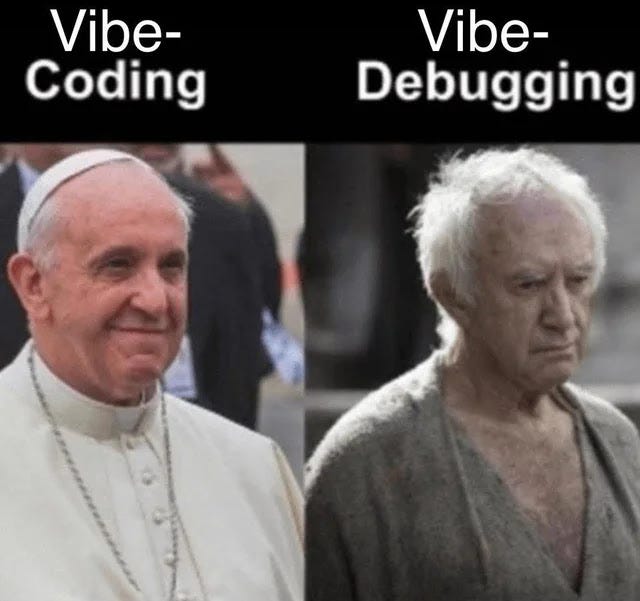
MEME OF THE WEEK
ML CONFESSIONS
Successfully Incomplete
I burned half a day once trying to “fix” a model whose validation accuracy had suddenly fallen off a cliff.
Retraining didn’t help. Hyperparam tuning didn’t help. Rebuilding the features didn’t help.
Hours later I discovered the truth: the model wasn’t broken.
Our infra team had swapped instance types that week to save on GPU costs.
Turns out the new ones were just slow enough that training hit an internal timeout - the job finished “successfully,” it just… never ran the last 10%.
So technically, nothing was wrong. Except that I’d forgotten to check the kind of machine I was running on.
Share your confession here.
Brilliant breakdown on howSierra's simulation framework sidesteps the determinism trap. The 5-15x repetition pattern with multi-agent eval is kinda what separates real agent testing from theatre, especialy when voice channels add accent drift and background noise variability. What's underrated here is wiring thsoe sims directly into CI/CD so latency regressions or tool misrouting get flagged before prod rather than after customer complaints.