English Has No Compiler
Plus… agent cost control, API access patterns, real-money guardrails, and a 35-tool CLI coding agent report.

As part of the move to AAIF, you’ll notice a few changes in the newsletter over the next few weeks, including some new podcasts in the mix, and a few hosted by the AAIF’s very own Alex Salkever.
HOT TAKE
Out the Window
A bigger context window is not the same as memory. It is just a more expensive place to forget things.
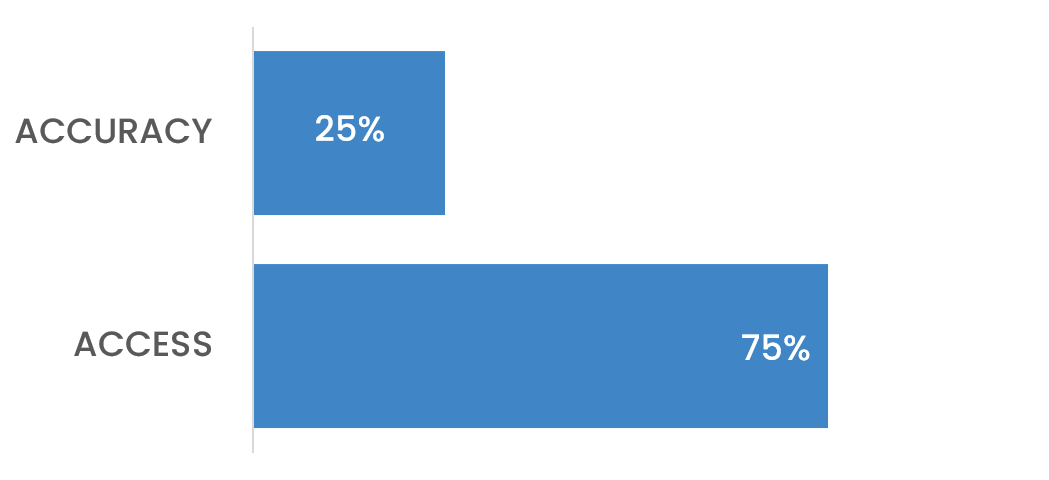
What matters more for agents: long context or persistent memory?
LAST WEEK’S TAKE
Access Granted
Have to trust the accuracy of the people who accessed the poll to tell us what matters more in production.
HIDDEN GEMS
Curated finds to help you stay ahead
Real-Money Agent Guardrail Patterns
Model judgment is separated from deterministic validation, with five production patterns for keeping mortgage-servicing agents from committing unsafe actions across arithmetic, permissions, tool use, and recovery.
CLI Coding Agent Market Report
Terminal-first agent use has matured into a crowded 35-tool field, with practical comparisons across lab CLIs, platform products, open-source harnesses, memory, orchestration, cost, and governance for choosing where to standardize.
Senior-model review is turned into self-contained implementation plans, with strict read-only rules, evidence requirements, executor handoff steps, and review gates for cheaper coding agents.
Shared skills package colleagues’ strongest prompts into a searchable, versioned library, giving teams reusable AI workflows with explicit access controls and an open-source SKILL.md toolchain.
JOB OF THE WEEK
Senior Engineer, Platform & Data // Mosaic Pediatric Therapy // Remote / Charlotte, NC
Mosaic Pediatric Therapy is hiring a senior platform and data engineer to support internal applications, AI-assisted operational tools, DevOps practices, and Azure Fabric Lakehouse pipelines across clinical, billing, credentialing, and analytics workflows involving sensitive healthcare data.
Responsibilities:
Establish standards for internal applications and AI-enabled operational tools.
Improve monitoring, alerting, incident response, and deployment workflows.
Maintain Azure Fabric Lakehouse pipelines across bronze, silver, gold layers.
Support reporting, tooling, and self-service data access for stakeholders.
Requirements:
4+ years supporting production software, data platforms, or cloud infrastructure.
Strong SQL, Python, Git, testing, debugging, and code review skills.
Experience building and maintaining production ETL or ELT pipelines.
Familiarity with Claude Code, Copilot, Cursor, or similar workflows.
MLOPS COMMUNITY
The Next Programming Language Is English
Natural language is becoming a programming interface, but it does not come with the guarantees developers are used to getting from formal languages.
Why AI coding changes the abstraction stack, replacing deterministic translation with probabilistic systems that need new safety nets.
How durable execution gives agents and tools a logical process that can survive client failures, network drops, and infrastructure chaos.
Why MCP tasks matter for long-running work, from streaming analysis to invoice processing, human approvals, durable timers, and scale-to-zero infrastructure.
The big shift is a programming model that keeps agent work alive when prompts, networks, tools, and humans fail.
AI Agents Should Be Treated Like Hackers
Your agent does not need every API. It needs the right slice, at the right time, with proof that it should have it.
MCP can connect agents to enterprise systems, but most APIs were built for trusted engineers, not autonomous software.
GraphQL offers a useful pattern for agent access because schemas expose business meaning and support field-level permissions.
The next challenge is richer context, better access patterns, audit logs, and accountability around business decisions.
Faster agents need narrower doors and better receipts.
Omnigent: Composition, Control, and Collaboration for AI Agents
Your agent may be right, but it can still burn money on the wrong model.
Why agent workflows need portable context, memory, and configuration across models and harnesses.
How forking conversations and agent debates can expose missed questions before work goes sideways.
Why tokenomics needs both developer-level visibility and centralized governance.
The payoff is practical control over agent work without pretending one model fits every task.
IN PERSON EVENTS
Munich - July 23
San Francisco, Voice Agents Forum - September 16
VIRTUAL EVENTS
Coding Agents Lunch & Learn Session - July 10
A Discussion on Loop Engineering - July 16
MEME OF THE WEEK
ML CONFESSIONS
Overconfidence Interval
We shipped a recommendations model once and everyone thought it had gone fine.
The numbers looked a bit better, nobody complained, and the person who’d led the build was being quietly smug about it, which was fair enough because it had been a horrible project.
About a week later, someone on the team messaged me saying one region looked “a bit too boring.” Same traffic pattern every day, barely any movement, almost like nothing had changed.
I checked the config and realized that region was still pinned to the old model because one of the rollout flags had been copied from staging and never updated.
So about a third of the traffic was not actually using the model we thought we’d shipped.
I sent it to the person who’d done the deploy, trying very hard not to sound pleased about it, because he had spent the previous few days telling everyone how clean the rollout had been.
To be fair, he fixed it quickly. But then we had to go back through the results and work out which numbers were real, which were old-model traffic, and which were basically just us congratulating ourselves on a config mistake.
Share your confession here.